Disc Golf Beginner Mistakes And The Simple Fixes That Work

You step onto the tee, heart thumping, ready for your first throw. Then the disc slices into a tree or stalls and crashes. These disc golf beginner mistakes turn excitement into a fast track to a double bogey. It feels unfair. You are keen, yet the disc has other ideas. Here is the fix. A few beginner disc golf tips, starting with smart disc selection and steady putting practice, will steady your flight path and your scorecard.
Disc Selection Advice to Avoid Beginner Pitfalls
Picking the right disc sounds simple, yet it is one of the most common disc golf beginner mistakes. Think of this section as a quick disc golf disc selection guide you can use on your very next round.
Focus on Fundamentals to Avoid Disc Golf Beginner Mistakes
Shiny tour series drivers are tempting. They are also built for arms that throw like trebuchets. Start with a putter and a midrange. They reward clean form, not brute force. As one top pro says, stick to the basics. Build a repeatable release, then add speed later. It is slower now, faster forever.
Disc Golf Disc Weight For Beginners
Weight changes everything. Lighter discs, around 150 to 165 grams, are easier to get up to speed, so beginners gain distance with less effort. They are, however, more affected by wind. Heavier discs, 170 to 180 grams, feel steadier in wind and finish more predictably, but they ask for more power. A smart start is a lighter putter and midrange, with a fairway driver in the mid to high 160s. Then test heavier versions as your form improves.
Disc Golf Plastic Types Explained
Base plastics such as DX or Pro D have great grip and low cost. They season quickly, which teaches touch. Premium plastics such as Star or Z keep their stability longer and handle tree hits better, yet can feel slick in cold or wet weather. Early on, pick a grippy base plastic putter and midrange, then add a premium fairway for durability.
Disc Golf Bag Essentials For Beginners
Carrying fifteen discs is a fast way to create indecision. Start simple.
- Putter, inside 60 feet and for straight approach shots.
- Midrange, neutral flight for learning angles.
- Fairway driver, speed 6 to 8, for controlled drives.
That is it. Add roles as your shot shapes grow. Simplicity beats a cluttered bag every time. These are beginner disc golf tips that pay off immediately.
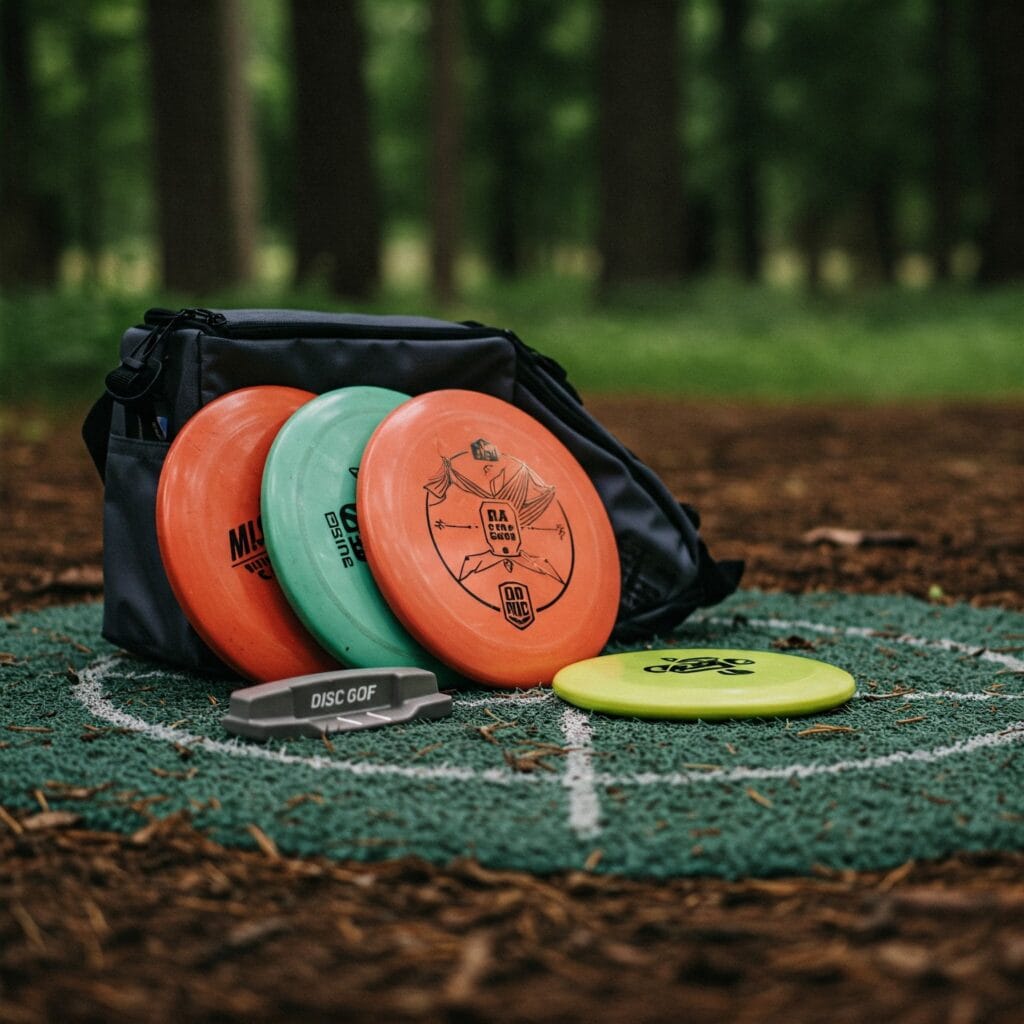
The Core of Disc Golf Do Not Neglect Your Putt And Approach Game
Big drives are fun. Birdies come from clean upshots and confident putts. Make time for putting practice and simple approach shots every week. Here are quick disc golf putting tips and disc golf approach shot tips you can use today.
- Putting routine, same feet, same breath, same aim every time.
- Aim small, pick a chain link on the golf basket.
- Inside the circle, finish with a flat wrist to control disc spin.
- Approach with a putter or neutral midrange, keep the line simple.
- Land flat to avoid big skips and wild fade.
Learn From Your First Discs And Avoid Disc Golf Beginner Mistakes
Your first discs are teachers. A putter and midrange reveal form flaws brutally and fairly. They build accuracy you cannot fake. Like learning scales before solos, this patience speeds up your long game later. Trust the process, and your future drivers will fly straighter for longer.
Understanding Flight Ratings To Avoid Common Throwing Mistakes
Flight numbers are a map, speed, glide, turn, and fade. Turn describes high speed movement, fade is how the disc finishes. For a right handed backhand throw, more turn means more movement to the right at speed, more fade means a stronger finish left. New players benefit from neutral or slightly understable discs, which reveal clean release angles and teach disc stability without fighting you. Learn to predict the disc flight path by pairing numbers with feel on the field.
Disc Golf Throwing Basics That Save Strokes
Backhand Throw Basics And Grip
Grip the rim firmly without white knuckles. Keep the nose down, wrist neutral, and pull close to your chest. Start with a slight hyzer throw angle and add anhyzer throw angle once you can hit lines. Focus on a smooth reach back, a balanced plant, and a clean follow through. This improves disc grip and spin without extra effort.
Forehand Throw Form Without The Sore Elbow
Learn how to throw a forehand safely. Use a two finger grip in the rim, elbow close to the body, and a compact motion. Snap from the wrist, not the shoulder. A flat to slight hyzer release with an overstable fairway tames early turn.
Wind Management For New Players
Headwind makes discs act less stable, so choose a more overstable option and throw lower. Tailwind adds glide and makes discs act more stable, so you can throw a straighter or slightly understable disc. Crosswind, aim upwind and keep the nose down. Small tweaks beat hero shots when flags are twitching.
Common Disc Golf Mistakes To Avoid On The Tee
- Ripping too hard, clean timing beats effort.
- Wrong disc for the wind, match stability to breeze.
- Ignoring angles, set hyzer or anhyzer on purpose.
- Planting off balance, athletic stance first, throw second.
- Skipping field work, ten focused throws teach more than a random round.
These are practical disc golf mistakes to avoid. Use them as a checklist. With time, you will predict the disc flight path before you throw it.
Common Questions That Disc Golf Beginners Ask
No. A putter, a neutral midrange, and one fairway driver are enough to learn form and shot choice.
Start around 150–165 grams for easier distance. Add heavier discs later for windy days and stability.
Grippy base plastics are great for learning. Add a premium fairway driver for durability and consistent flights.
Overstable drivers too soon, too many discs, and no putting routine. Keep it simple and practise basics.
Speed, glide, turn, and fade predict flight. New players should try neutral or slightly understable molds first.
Start with backhand for simpler mechanics. Add a controlled forehand for flexible lines and wind.
Little and often. Ten minutes a day beats one long session a week for confidence and form.