How To Play Disc Golf In The Wind With Confidence And Control

If you are wondering how to play disc golf in the wind, you are not alone. Gusts make good throws look silly, then make you question your form, your discs, even your life choices. The fix is simpler than it feels. With the right disc selection, small angle tweaks, and clear course management, you can turn chaos into free distance and fewer putts.
When is wind too much for disc golf?
There is no single number, but a few cues help. Look at wind speed, direction, and how exposed your course is. For many players, steady winds around 25 to 35 km/h, 15 to 22 mph, are playable. Above that, you will need tighter lines and overstable discs. Gusts are the real trouble, they turn a safe height into a balloon.
Use weather reports for wind direction and gust spread. Then trust your feel. If you cannot keep a putt under the band from 8 metres, or your drivers lift despite a nose-down release, call it a skills day and throw practice lines. Your personal threshold comes from experience and honest self-assessment.
How to adjust your throw for wind
Stability starts at the ground. Widen your stance, plant a touch slower, and keep your head still through release. Use a firmer grip technique without squeezing the life out of the disc. Small adjustments compound fast in windy air.
- Disc golf wind shot angle Keep the nose down into a headwind, keep it neutral or a hair nose-up with a tailwind.
- Height control Control your release height. Lower lines cut through gusts better than floaty sky shots.
- Line choice Aim off the basket when crosswinds push. Start the disc upwind and let it ride back.
- Speed management Throw with clean acceleration, not extra muscle. Spin stabilises flight more than raw power.
How wind changes your disc’s flight
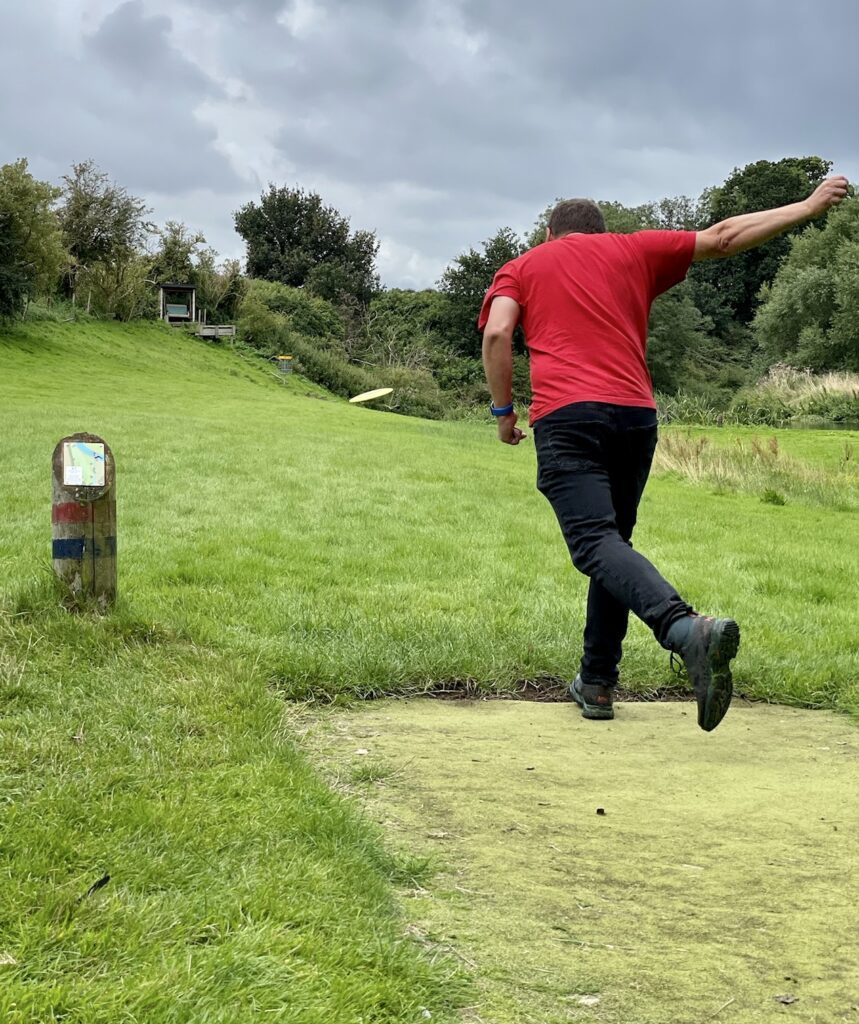
Tailwinds make discs act more overstable, often pushing them down early, which can be great for extra skip distance. Headwinds do the opposite, they expose the underside, add lift, and make discs act less stable. Crosswinds exaggerate fade or turn depending on your release angle.
Think in ratings. A lower turn rating and higher fade rating helps in headwinds. Neutral mids and putters fly truer into a tailwind because they do not stall as easily. Crosswinds reward tidy angles and flatter releases. Learn how your discs behave at different speeds and heights, then build automatic adjustments from that knowledge.
How to play disc golf in the wind
Disc golf headwind technique
Throw low and flat with a clear nose-down into a headwind. Choose overstable drivers and mids so the wind does not flip them early. Aim a little tighter to the line, then trust the late fade. If you must throw anhyzer, keep it shallow and committed so it does not roll into the sky.
Disc golf tailwind throws
Tailwinds shorten glide and add ground play. You can club down in speed, even power down a stable mid. Start the disc a touch higher so it has time to push forward, but avoid floaty angles. For putts, aim flatter and a hair higher, the tailwind will drop the nose.
Playing crosswind lines
Throw into the wind to fight the push. In a left-to-right crosswind, a hyzer holds its wing down and rides forward. In right-to-left, a flat to gentle anhyzer can pierce and pan softly. Read the wind direction every throw and adjust your aim by a few metres. That small nudge saves strokes.
Playing disc golf in wind with the right discs
Disc selection matters more than power on blustery days. Overstable discs for wind keep their shape in the air, so you get a predictable finish. Look for a lower turn rating and a healthy fade rating on drivers and mids. For approaches, stable putters reduce lift and hold lines cleanly.
- Choosing discs for windy disc golf Pick trusted moulds you can throw confidently at 80 to 90 percent power.
- Drivers Speed is fine if you have clean form, but stability beats speed when gusts pick up.
- Midranges and putters Stable to overstable options give you straighter approaches and safer misses.
They resist turn and finish predictably when air gets messy. Into headwinds or crosswinds, their fade holds the line and keeps you in bounds.
Throw nose-down and a touch lower than usual. Use a stable or overstable disc to avoid early turn.
Only if you can keep the nose down and spin high. Stability matters more than speed on gusty days.
Tailwinds push putts down. Aim a fraction higher and keep the putt flat and firm.
Keep lines low, pick stable discs, and practise short upshots. Learn how to play disc golf in the wind with simple, repeatable throws.
Mental focus in the wind
Wind exposes doubt. Keep your routine tight, decide, then commit. If the gust shifts mid-flight, accept the bounce and move on. The next shot is always the only shot you can shape.
Use quick checks before every throw. Feel the breeze on your face, glance at moving trees and flags, and watch other players’ discs. Visualise the start line, then trust the plan. Calm choices beat perfect mechanics in noisy air.
Pro tips for playing disc golf in wind
Here are practical, field-tested ideas that make windy disc golf simpler and more repeatable.
1. Disc angles and wind interaction
Wind sees your nose angle first. Small changes in tilt swing the flight outcome. Practise flat, hyzer, and anhyzer with the same run-up so you can pick the right tool on the tee.
2. Wind reading techniques
Carry a light ribbon on your bag, it shows gusts at tee height. Compare it with tree tops to spot shear layers. If the tee is sheltered but the fairway is open, plan for stronger push mid-flight.
3. Course microclimates
Hollows, ridges, and tree gaps bend wind direction. Expect lift at the top of hills and drops behind them. Adjust your height window to match.
4. The art of windy putting
Keep a firm, spinny putt. Into a headwind, aim centre and slightly lower. With a tailwind, aim a tick higher and flatter. Crosswinds call for aiming off the basket on the upwind side.
5. Fieldwork that pays
Practise disc golf in windy conditions on purpose. Throw ten shots with the same disc at different heights and angles. Make notes on what truly works, then use those reps on the course.
6. Disc golf wind course management
Favour wider landing zones, pick safer sides of trouble, and bail early if a gust would punish a miss. Lay up low in headwinds rather than float long past the basket.
Quick disc golf wind tips
- Disc golf wind tips Keep the nose down into headwinds, throw lower, and trust overstable discs for wind.
- Disc golf wind adjustments Move your aim upwind and shorten carry distance when gusts build.
- Windy disc golf strategies Choose the simpler line that lands you putting more often.
- Disc golf in windy conditions Test a few releases before the round to set your baselines.
- Disc golf wind course management Play for the big miss, not the perfect shot.
Playing disc golf in wind with style
Wind rewards tidy decisions. Read the air, pick the right disc, set a clean angle, then throw with calm intent. With these habits, gusts stop feeling like chaos and start looking like free strokes.