Discraft Buzzz Review Honest Midrange Insights That Stick

Every bag needs a midrange you trust. This Discraft Buzzz review spells out why the Buzzz earns that slot, with on-course notes, plastics, flight numbers and buying tips that cut through guesswork.
If your midrange keeps turning early, fading late or flying differently each run, you play defence on every tee. Doubt sneaks in, your release tightens and easy pars become creative recoveries. The Buzzz fixes that by flying the line you show it, again and again, so your brain relaxes and your hands do their job.
In our Discraft Buzzz review you will find an honest Buzzz review, in-depth Buzzz review pointers and a simple way to pick the right plastic. By the end you will know when it behaves like a laser, when it drifts on a gentle turnover shot and when a firmer fade is the better call.
Discraft Buzzz review for real course conditions
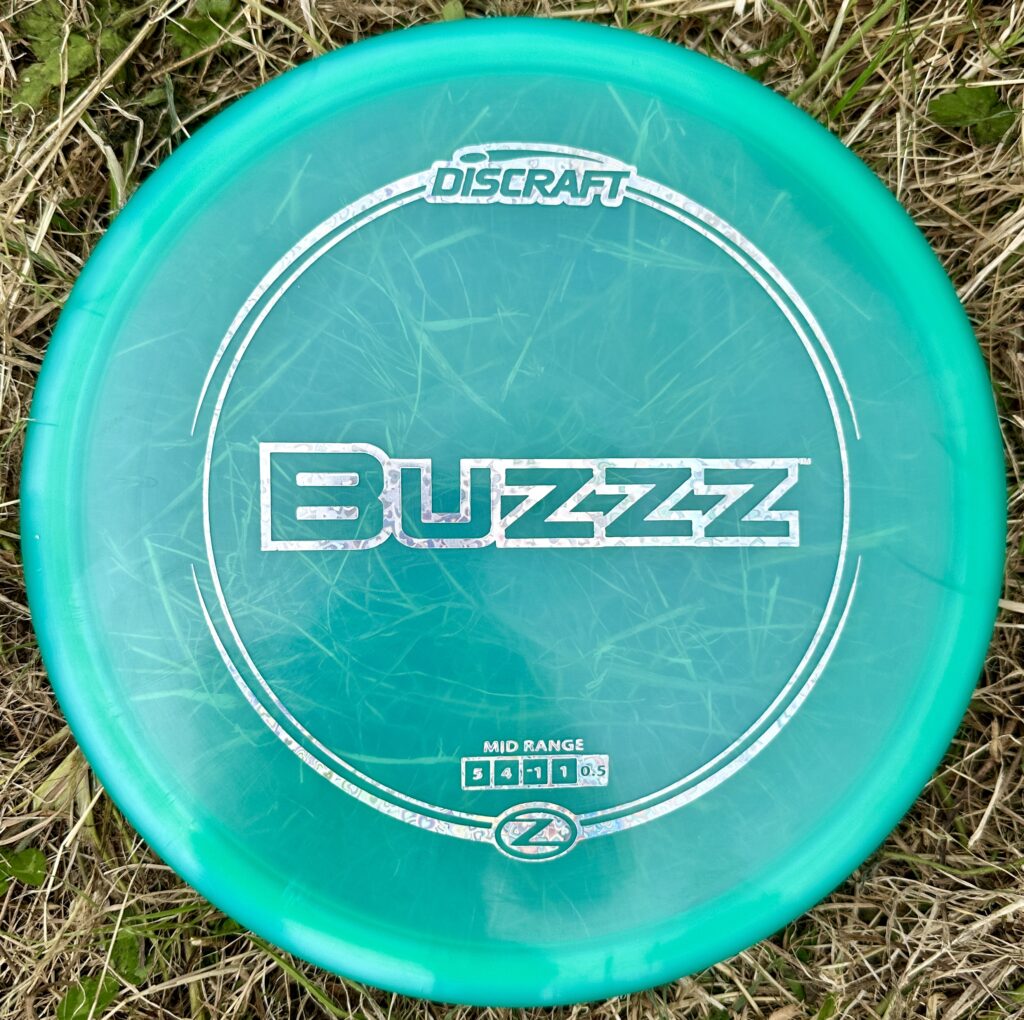
Flight numbers 5 speed, 4 glide, -1 turn, 1 fade. For most intermediate players, expect controllable carries of 70 to 95 metres with minimal lateral drama. It holds the angle you release, so hyzer stays hyzer, flat stays flat and anhyzer drifts without bailing out too soon.
- Straight control Point and shoot on tight fairways. It tracks like a rail when thrown flat with clean spin.
- Shaping Hyzer-flip to straight for easy distance, or a gentle turnover shot that pans but still checks up at the end.
- Wind Discraft Buzzz wind performance is solid in light to moderate headwinds. Club up in stiff gusts or add hyzer and throw lower.
- Approach Predictable landings for approach shots inside 60 metres, especially on slight hyzer where it sits rather than skips.
Discraft Buzzz performance characteristics
Think of it as a truth-teller. The Buzzz magnifies your release angle, which is brilliant for learning and consistency. Smooth power makes it sing, strong power needs clean nose-down control. Thrown with touch, it replaces a fairway disc on many short par threes.
What is a Buzzz disc
The Buzzz is a workhorse Buzzz disc golf midrange in the speed 5 class. It sits between putters and fairway drivers, giving you distance with control and accuracy when gaps get tight.
- Design A comfortable, flat top with a low profile that suits both fan and power grip. The shallow rim boosts clean releases and reliable grip in all weathers.
- Use cases Tight lines, straight tee shots, touchy upshots and controlled turnovers. If you want one disc to map a whole course, this is a sensible start.
Discraft Buzzz plastic types
- X Tacky feel and quick seasoning, great grip in cold, loses stability fastest.
- ESP Grippy with good durability, slightly less stable than Z for many runs, excellent in wet conditions.
- Z-Line Stiff, slicker and very durable, typically a touch more stable out of the box.
- Big Z Similar flight to Z-Line with a glossier hand feel and eye-catching stamp.
- Other runs Titanium and special runs can feel firmer and start a tick more stable.
If you like a straighter finish, go ESP. If you want a bit more bite and maximum durability, choose Z-Line or Big Z. This Buzzz review plastic types snapshot keeps shopping simple.
When did the Discraft Buzzz come out
The Buzzz launched in 2002 and has changed very little since. That stability of design is why players trust it, you can buy a new one and get the flight you expect.
Discraft Buzzz history summarised
- Origins The Buzzz started as a modification of the Discraft Wasp, removing the bead to create the flat, neutral flyer everyone knows.
- Wasp tooled Early runs carried Wasp tooling on the inner rim. Many of those flew a hair more overstable than later runs, which is why collectors chase them.
- Consistency Decades of tournament wins and aces built its reputation for reliability and consistency.
Wasp vs Buzzz comparison
They share DNA but fly different roles.
- Rim and feel Wasp is a touch deeper with a bead, Buzzz is flatter and a bit shallower.
- Flight Wasp is more overstable, favouring wind and reliable fade. Buzzz is straighter with easier turn control.
- Who should bag which Power throwers or blustery course regulars like the Wasp. Everyone else will score with the Buzzz on straight lines and shaping shots.
What does Wasp tooled Buzzz mean
It refers to early Buzzz runs using Wasp tooling on the rim. Those pieces often start slightly more overstable than many modern Buzzz runs.
Who makes the Buzzz
Discraft, founded in the late seventies in the United States, makes the Buzzz. Their catalogue includes the Zone, Undertaker, Force and Luna, with a strong record for durability, grip and consistent moulds.
Discraft Buzzz for beginners
This Buzzz review for beginners is simple. Start in ESP at 170 to 175 grams for straight flights that teach clean form. Throw it on slight hyzer and watch it stand up and glide. It rewards smooth tempo far more than raw power.
Approach shots with a Buzzz
Inside 80 metres, think midrange putt. Aim a metre wide of danger, throw with a touch of hyzer and a flat nose and the disc will land flat and stay close. For soft anhyzer approaches, release a fraction high and let the glide finish the work.
Discraft Buzzz wind performance
In headwinds up to moderate, add a smidge more hyzer or step to a fresh Z-Line. In crosswinds, keep it lower and spin it harder. In strong headwinds, use a Wasp or Zone and save the Buzzz for tailwind lasers.
Pro players who bag a Buzzz
Top players including Paul McBeth and Paige Pierce have thrown the Buzzz in competition. That is less about hype and more about trust, it flies true under pressure.
Buzzz review verdict
If you want one mid to build your game around, the Buzzz is the safe, smart pick. Our Discraft Buzzz review shows reliable straight flight, easy shaping and long life in premium plastics. Buzzz review consistency is the real story here.
To wrap, this is an honest Buzzz review for regular golfers, not a lab test. It is an in-depth Buzzz review where grip, durability, control and accuracy get equal airtime, so your next throw has fewer surprises.