
Discraft Comet Review Timeless Mid-Range Control With Glide

If your mid-range keeps yanking left or turning over at the worst moment, this Discraft Comet review is for you. The Comet rewards clean form with easy distance and straight flying mid-range lines, so you miss fewer gaps and make smarter choices in the woods and the wind. This Discraft Comet disc golf review gives you clear guidance on plastics, weights, release angles and where the Comet beats its rivals.

Ever turned up to a course without your bag? I did at Morley Field in San Diego. I hired a small stack and, by luck, a Comet landed in my hand. One round later, I remembered exactly why this mould has real staying power. Smooth, neutral, and honest. The Comet tells the truth about your form and then rewards you for fixing it.
Ah, the Comet. Some call it old school. The real story is that good design ages well. In this mid-range disc golf disc review you will get practical notes on flight characteristics, feel, and shot selection, plus a quick Comet vs Roc comparison so you can decide where it fits in your bag.
Discraft Comet Review for Modern Play
The Comet’s party trick is control at sensible power. Throw it flat and it holds, give it gentle hyzer and it drifts to centre, tip it to anhyzer and it glides without burning over. That forgiveness comes with a condition, spin it clean and it rewards you with pinpoint accuracy. If you rush the hit, it will let you know.
Discraft Comet flight characteristics
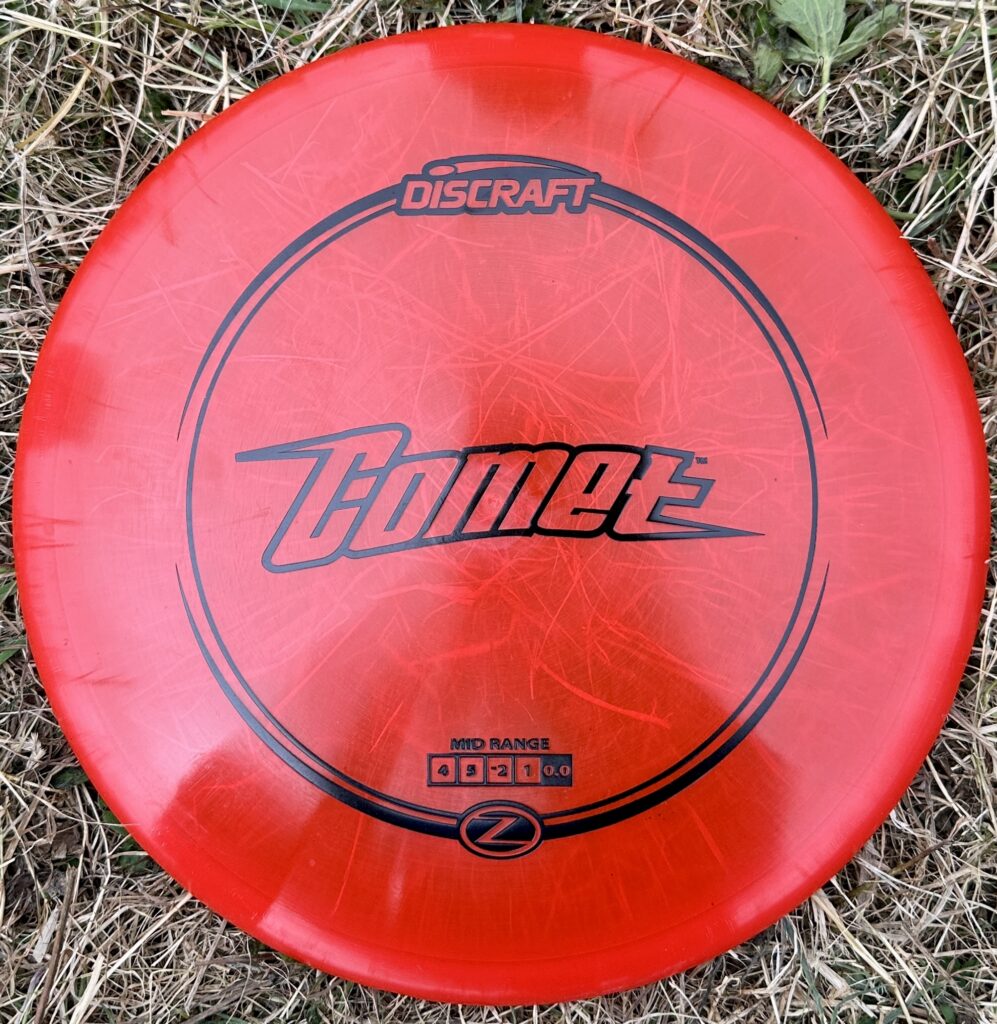
Typical numbers are 4 speed, 5 glide, -2 turn, 1 fade. In plain English, it is neutral to slightly understable with serious glide. The high glide means you can throw it slower, keep the nose down, and still reach your landing zone. That is why it shines on low-ceiling fairways and wooded course lines.
Line shaping made simple
- Straight shots, flat release, nose down, let the glide do the work.
- Hyzer to flat, start it on gentle hyzer and watch it level to centre.
- Controlled turnovers, smooth anhyzer with height, it pans without a wild cut roll.
- Approach shots, power down to 50–70 percent for clean, touchy lands.
Discraft Comet stability in real wind
This section explains Discraft Comet stability. Light headwinds ask for extra hyzer or a firmer plastic. In calm to tailwind conditions, it is laser straight. If your course is windy most days, pair the Comet with a more overstable mid for security outside the trees.
Feel, plastics and weights
The profile is shallow with a subtle dome that fuels the glide. Z and Big Z feel slick and keep their shape the longest. ESP adds grip in mixed weather. Jawbreaker is grippy and beats to a buttery turnover. Go 175–177 g for control in mixed conditions. If you have lower arm speed, a 170–173 g Comet will help you access that long, drifting line quicker.
Backhand and forehand tips
Discraft Comet backhand lines ask for clean spin and modest reach-back. Think smooth tempo rather than smash. For touch forehands, Discraft Comet forehand float is real, as long as you keep the wrist firm and the release flat. It is not a forehand cannon, it is a finesse tool for woods and short placement shots.
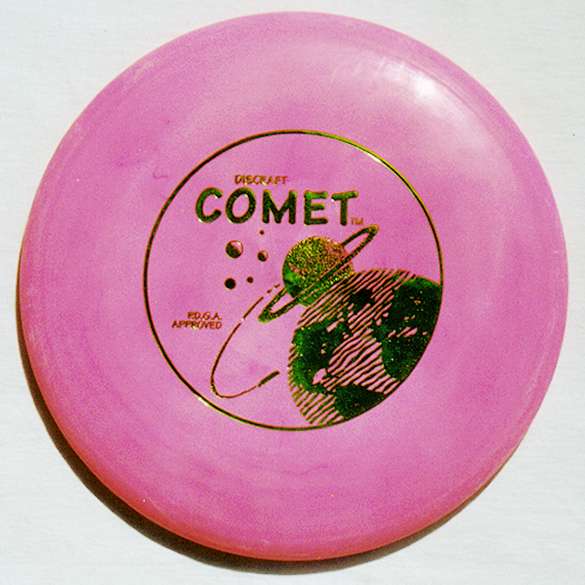
Comet vs Roc comparison
The Roc family starts more overstable with a stronger finish. The Comet is straighter for longer and needs less speed to fly full. If you fight early fade on mids, the Comet will feel easier. If you love a firm finish and frequent headwinds, the Roc covers that role better. Many players bag both for different windows.
Who the Comet suits
- Beginners who want feedback and easy glide. See the Comet review for beginners notes below.
- Intermediates chasing straight fairway hits and shaping approach shots.
- Experienced players who like neutral mids for touchy gaps.
Comet review for beginners
Start with a comfortable weight and a grippy plastic. Focus on a smooth release and nose-down angle. The Comet will teach you clean angles faster than most discs because it flies where you point it. That is Comet disc performance in one line.
Real throws and shot notes
- 200–250 ft tunnel, flat, chest-high line, the Comet holds centre and sits soft.
- 260 ft slow anhyzer, give it height and it pans to the right without dumping.
- 180 ft standstill, slight hyzer, it pops up, rides, and settles pin high.
- Circle 2 bid, floaty spin, it carries straighter than most mids and gives a safe miss.
Pros and cons at a glance
- Pros, straight flight, outrageous glide, touch forehand utility, top-tier feedback.
- Cons, touchy in headwinds, punishes nose-up, not a power forehand disc.
Buying advice and bag fit
If you want a neutral workhorse, it belongs in any shortlist of the best mid-range disc golf discs. For durability, pick Z or Big Z. For grip and easy turnovers, go ESP or Jawbreaker. Pair it with a stable mid for wind and a slow putter for short touch shots. That trio covers most mid-range gaps with minimal overlap.
Field notes from Morley Field
With the hire bag, I threw the Comet on five tight fairways. It asked me to slow down, keep the nose level, and trust the glide. The result, parked twice, simple layups on the rest. That is Discraft Comet flight characteristics doing exactly what they say on the tin.
Final call
If your bag is missing a neutral mid that tells the truth, the Comet is a smart pick. It slots in cleanly, pairs well with a beefier mid, and it makes you a better thrower. This Discraft Comet review is simple, throw it smooth, keep it flat, and let the disc work. You will see why it keeps a spot in so many bags.
Still curious? This Discraft Comet disc golf review covered stability, form tips and a quick Comet vs Roc comparison so you can pick with confidence.